

Why Most South African Businesses Have Data, But Still Struggle to Make Decisions
Most South African businesses don’t have a data problem — they have a data coordination problem. Learn why fragmented systems stall decisions and what a unified data foundation makes possible.
Most South African businesses are not short on data. Sales transactions, customer interactions, operational activity, financial records — data is being generated continuously across the organisation. In many cases, businesses have already invested in multiple systems to capture and manage it. Yet despite this, decision-making remains slow, inconsistent, and often based on incomplete information.
This is the disconnect.
The issue is not how much data exists. It is how usable that data actually is.
The Data Coordination Problem Facing South African Businesses
In most organisations, data lives across multiple systems that were not designed to work together. Sales sits in one platform, finance in another, operations somewhere else, and customer data is often fragmented across several tools.
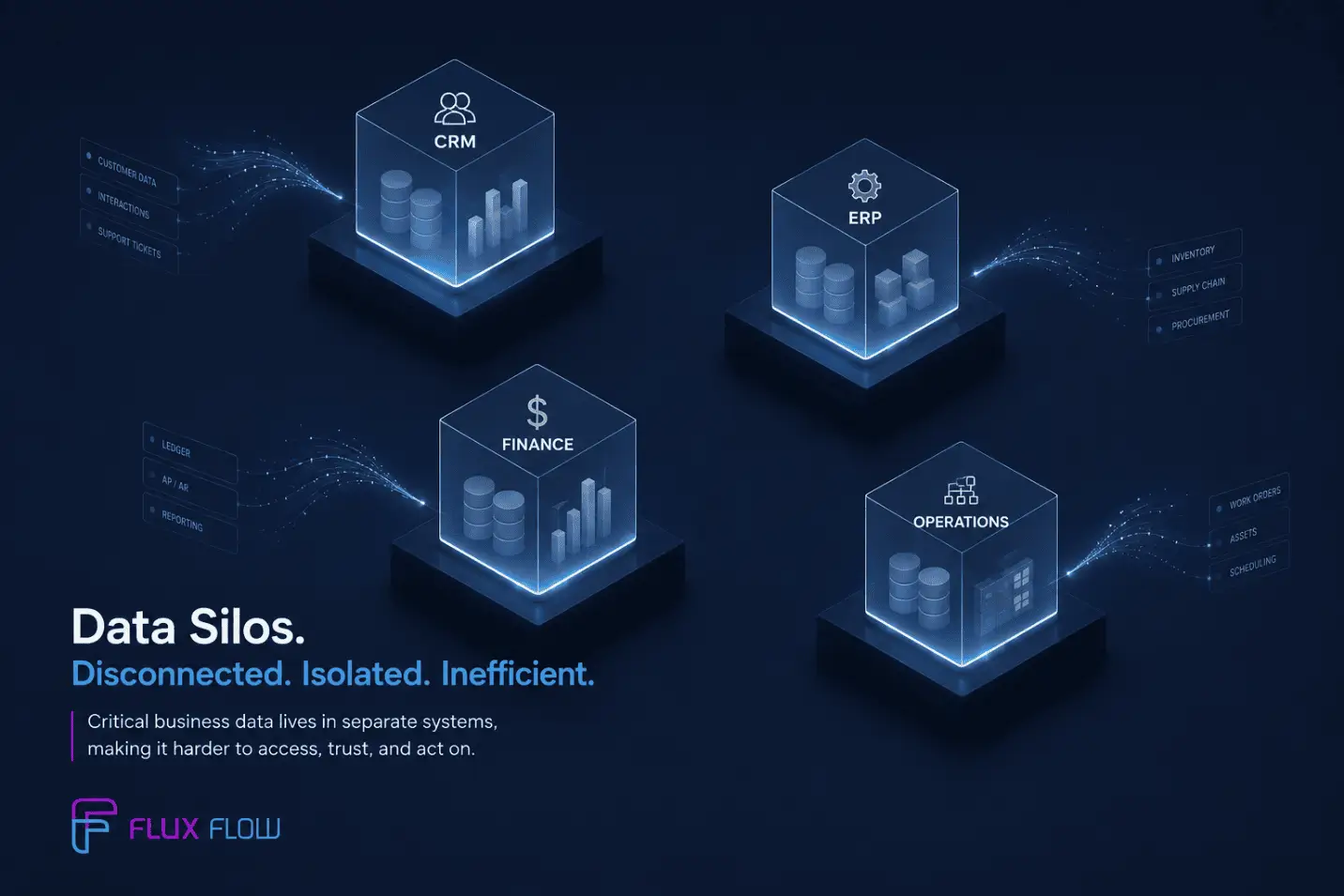
Each system performs its function well. But there is no consistent layer that connects them, standardises the data, and makes it available in a single, reliable view. As a result, answering even basic operational questions becomes a manual process. Data has to be extracted, combined, cleaned, and reconciled before it can be used. This takes time, introduces errors, and reduces confidence in the output. By the time the business has an answer, it is already behind reality.
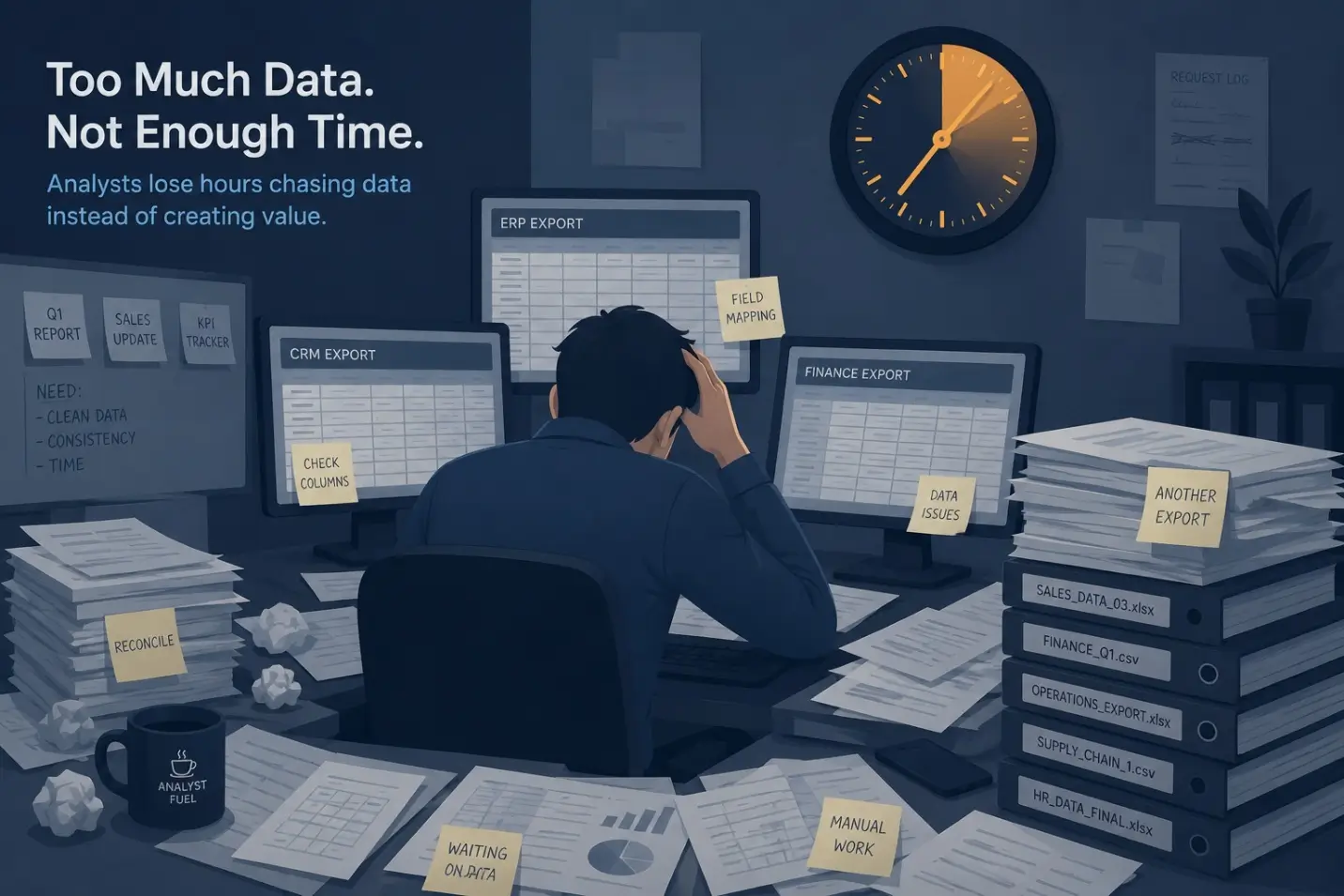
This Is Not a Reporting Problem. It Is a Data Foundation Problem.
Without a proper data foundation, every report is a workaround. Every dashboard depends on fragile pipelines or manual effort. And every decision is made with some level of uncertainty.
For a long time, this was manageable. It was inefficient, but the business could still operate.
That is no longer the case.
The operating environment has changed. Businesses are dealing with more systems, more data, and shorter decision cycles. At the same time, there is increasing pressure to adopt analytics, automation, and AI.
But these capabilities do not solve fragmented data. They depend on fixing it.
Why Analytics and AI Initiatives Fail to Deliver Value
If the underlying data is inconsistent, incomplete, or delayed, then anything built on top of it — dashboards, reports, or AI models — will inherit those same issues.
This is why so many initiatives fail to deliver value. They are built on top of a foundation that was never designed to support them.
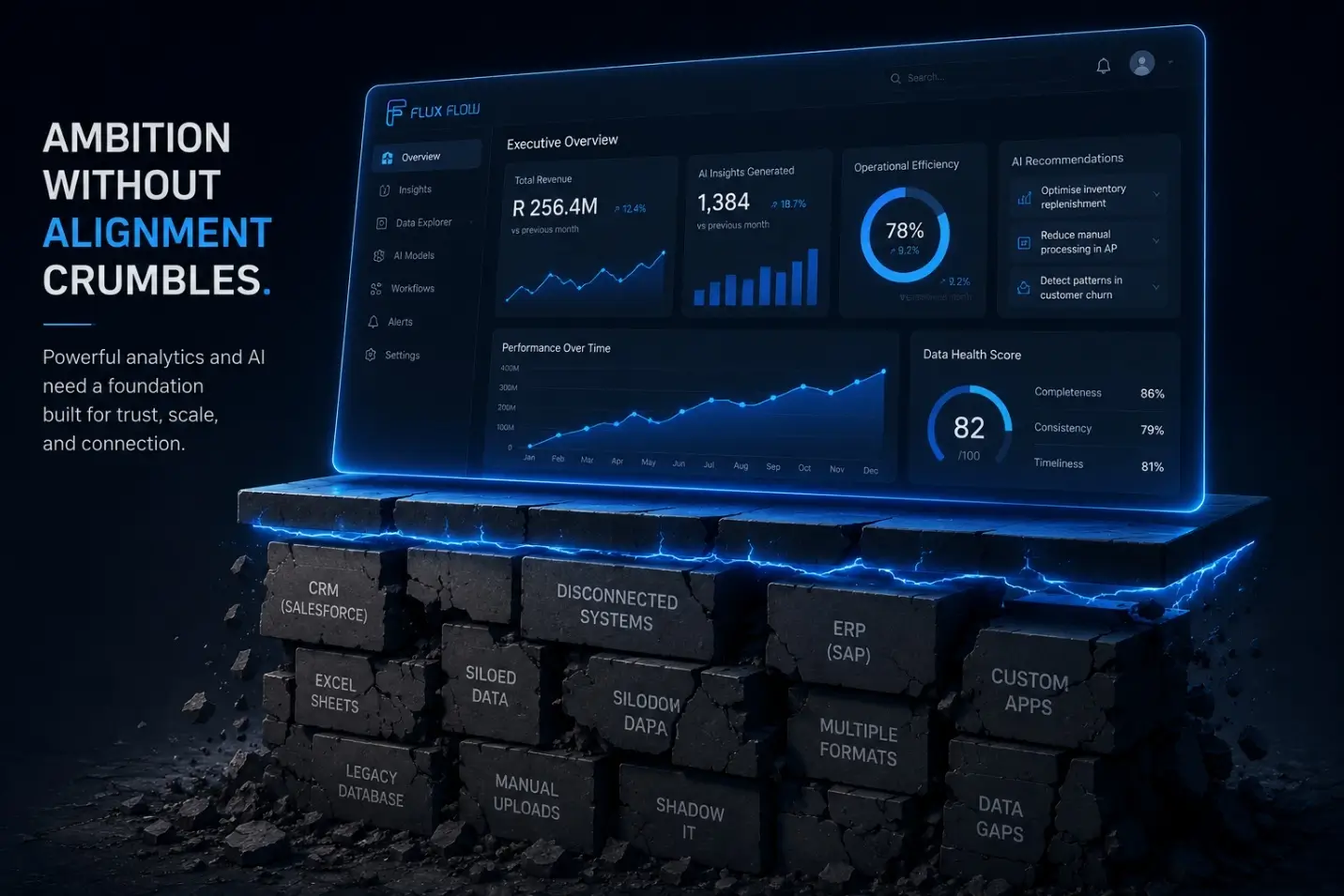
The businesses that are moving forward are taking a different approach. They are not starting with dashboards or AI tools. They are starting with the data layer itself.
What a Unified Data Foundation Makes Possible
When data across systems is connected, structured consistently, and made available in a single, governed environment, the business operates differently.
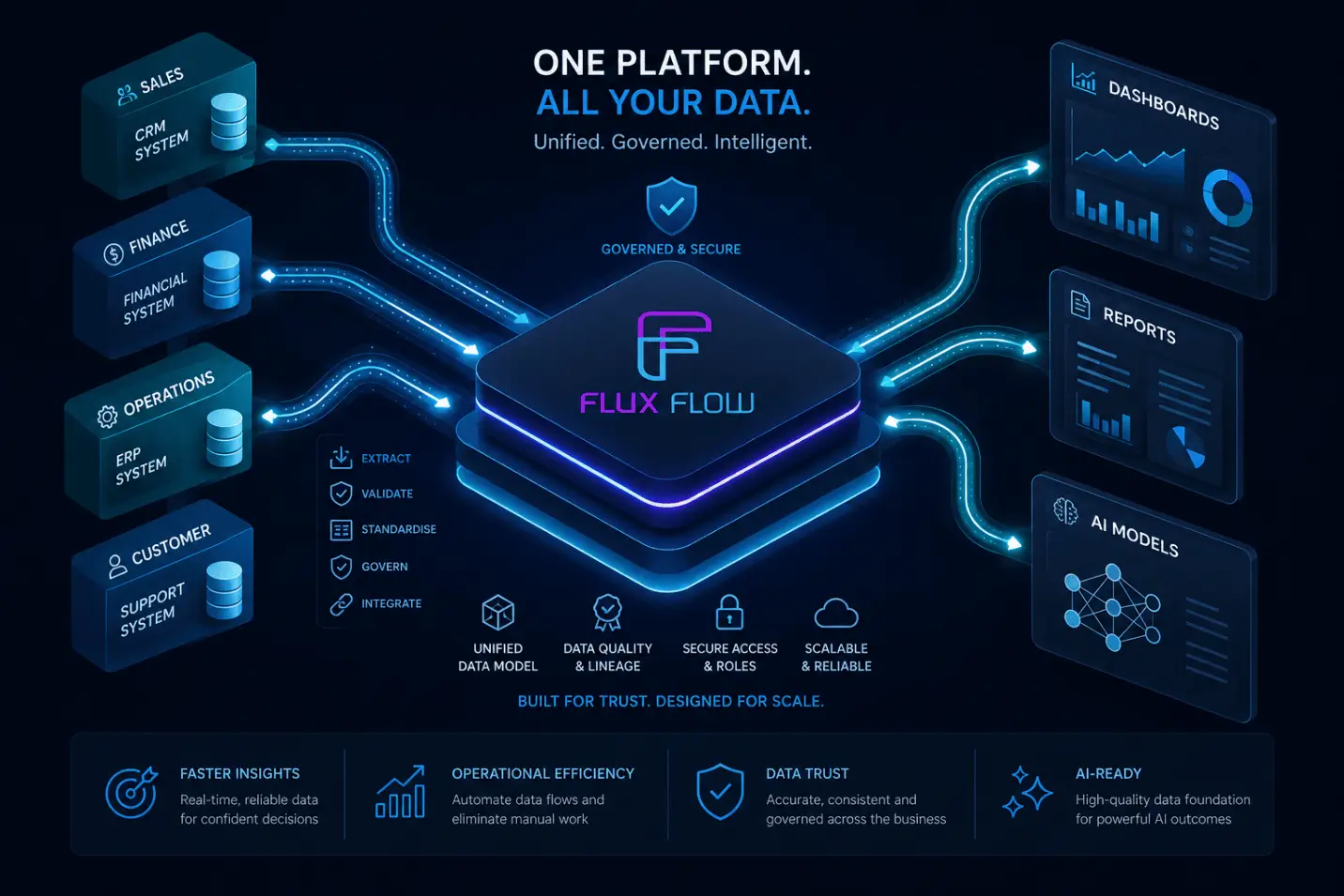
A properly structured data foundation for South African businesses provides:
- Immediate access to reliable information across departments
- Consistent, trustworthy data that teams act on rather than question
- Elimination of manual reconciliation between systems
- Real-time operational visibility instead of delayed reports
- A stable base for AI and automation that produces consistent results
Instead of reacting to reports, the business can operate with real-time visibility. This is also the point where AI and automation become practical — not as isolated experiments, but as capabilities that can be deployed across the organisation with consistent results.

The Takeaway for South African Business Leaders
Most South African businesses do not have a data problem. They have a data coordination problem. Data exists. But it is not connected, standardised, or accessible in a way that enables fast, confident decision-making. Until that is addressed, more tools will not fix the issue.
Before investing further in analytics, automation, or AI, there is a more important question to answer:
Is your data foundation strong enough to support it?
Book a discovery session to map what a unified, governed data foundation would look like in your environment.