

Your Data Setup Is “Good Enough” — Until It Isn’t
Fragile integrations and manual processes feel manageable — until your business tries to scale with AI. Learn why “good enough” data infrastructure fails when it matters most.
Your Data Setup Is “Good Enough” ... Until It Isn’t
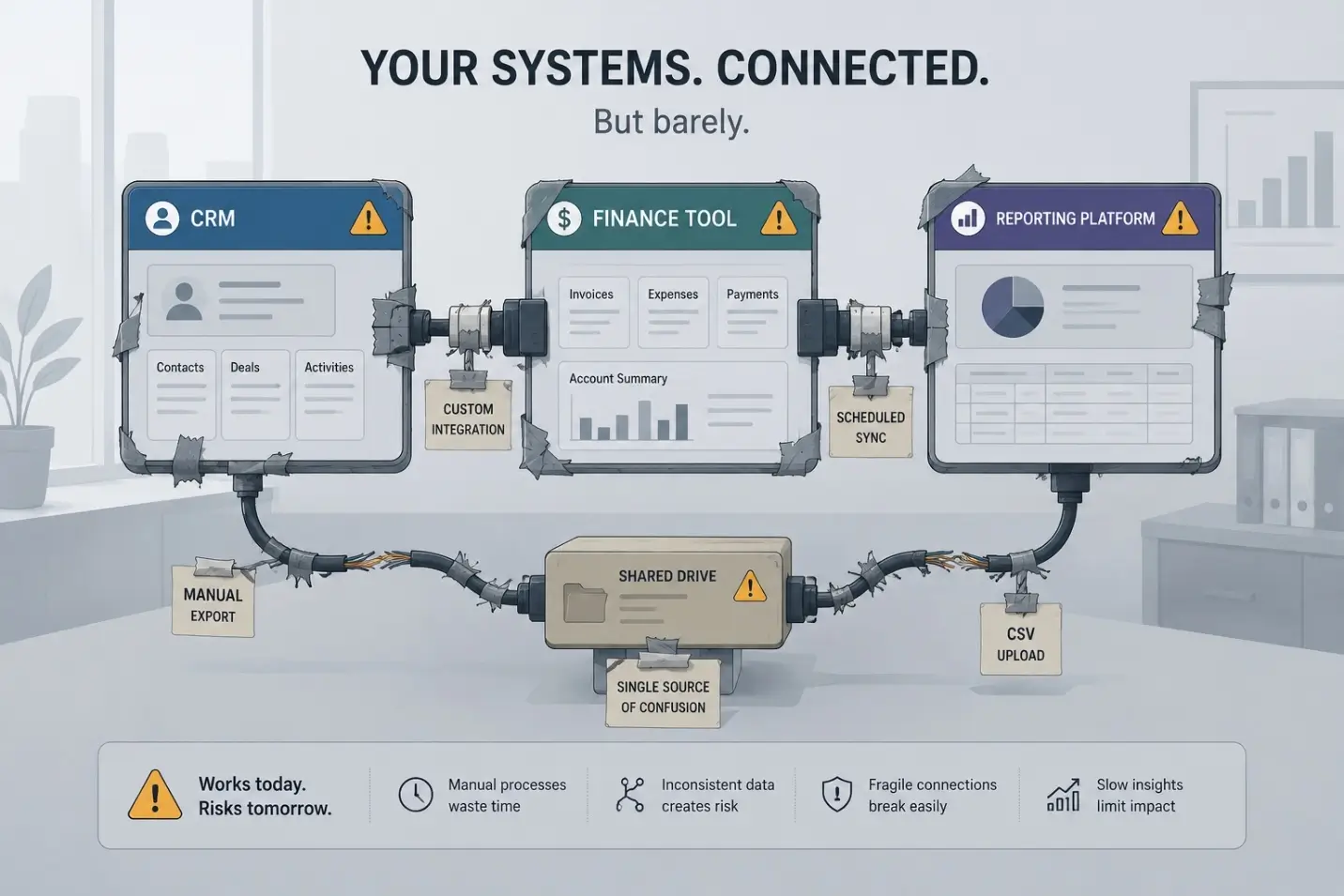
Most businesses already know their data setup isn’t perfect. There are small gaps. A few manual steps. Some reports that only work if the right person runs them. Integrations that mostly hold — until they don’t.
But none of it feels urgent enough to fix. So it stays.
What “Good Enough” Actually Looks Like
A CRM that doesn’t fully align with finance. Reports that require manual checks before they’re trusted. Processes that rely on one or two people knowing how things actually work behind the scenes.

Individually, these don’t seem like major issues. But collectively, they create friction across the business. And more importantly, they create risk.
The problem is not that the system is broken. The problem is that it is fragile.
How Fragile Data Infrastructure Compounds Over Time
Every time a new tool is added to the business, another connection needs to be built. Another dependency is introduced. Another point of failure is created.
What started as a few simple integrations becomes a web of dependencies that is difficult to maintain and even harder to change. When something breaks, it is not always obvious where the issue sits — or how far the impact spreads.
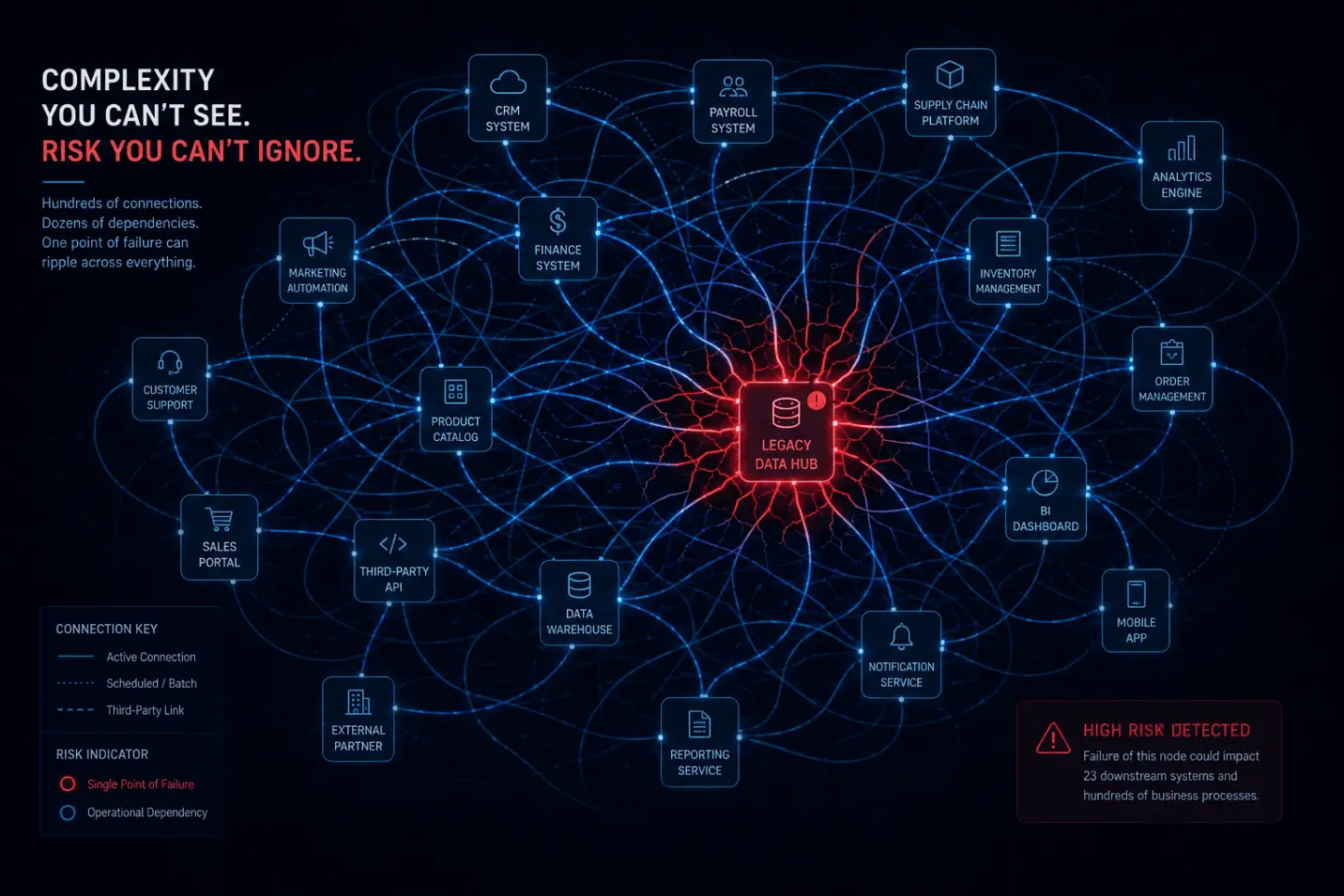
Layer in manual processes and the picture gets worse:
- Exports that need to be run on schedule
- Data that needs to be reconciled across systems
- Reports that need to be checked before they can be trusted
Each manual step introduces delay, inconsistency, and dependency on specific individuals. And none of this scales .
Why “Good Enough” Fails When AI Enters the Picture
For a while, businesses operate like this without major issues. Until they try to do something more.
That “something more” is increasingly AI. AI is no longer experimental. It is being actively adopted across South African businesses — from analytics and forecasting to AI agents that monitor operations and automate decisions.
But AI does not work on “good enough” data. It requires data that is connected, consistent, and reliable in real time. If the underlying data is fragmented or dependent on manual processes, AI does not fix the problem — it amplifies it. Instead of getting better insights faster, businesses get unreliable outputs faster. Instead of automation, they get noise.
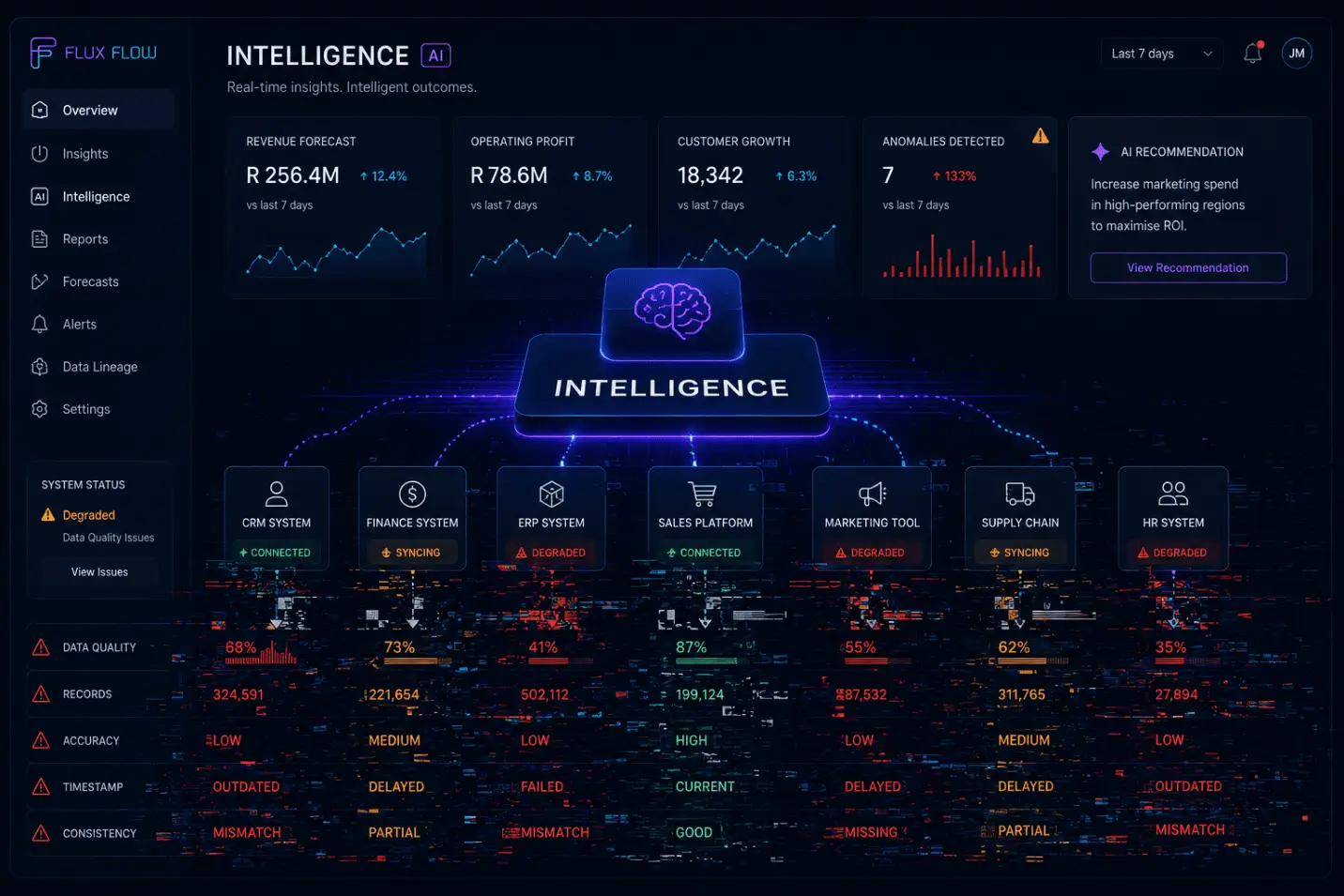
The Gap Between What Businesses Think Their Data Can Support and What It Actually Can
What worked when reporting was weekly and decisions were slower does not hold when the expectation is real-time visibility, automation, and AI-driven operations.
The gap between what the business thinks its data can support and what it actually can becomes visible very quickly. And closing that gap is not a quick fix.
What Businesses Getting Ahead Are Doing Differently
The businesses that are getting ahead are not waiting for this breaking point. They are addressing the foundation now.
They are moving away from fragile integrations and manual processes, and towards a single, governed data layer that:
- Connects systems without point-to-point dependencies
- Standardises data across the organisation
- Makes information available in real time
- Reduces reliance on specific individuals to run processes
- Creates a platform the business can actually build on
This is not about fixing reports. It is about enabling the next phase of how the business operates.

The Question Worth Asking Now
If your current setup still relies on manual steps, fragile integrations, or delayed reporting, it is worth asking:
Can this actually support where the business is going — or just where it has been?
Replacing Fragile Infrastructure with FluxFlow
FluxFlow replaces fragile, manual data setups with a unified, governed data foundation — built to support real-time decision-making, automation, and AI.
Book a discovery session to see how your current setup compares — and what it would take to fix it.